
Metal Parts for Marine & Leisure Yachts
Marine-grade custom metal components for yacht builders, boat manufacturers, and marine equipment fabricators — deck hardware, railings, hull fittings, pipe flanges, and structural components manufactured from 316L and 2205 Duplex stainless steel, salt-spray tested for harsh saltwater environments.
Marine Yacht Fabrication — Built to Withstand Saltwater
Marine and yacht environments destroy ordinary steel within months — chloride-induced pitting, galvanic corrosion, hydrogen embrittlement, and biofouling all attack metal components from every direction.
Conwhole has been supplying custom marine-grade metal components to yacht builders, boat manufacturers, and marine equipment fabricators since 2010. Our capabilities cover the full range of marine metal fabrication: certified welding for hull structures and pressure vessels, precision machining for hydraulic and pneumatic yacht fittings, laser cutting for plate and structural components, and a managed finishing partner network for pickling, passivation, and marine-grade coating.
What sets us apart for yacht clients: 316L / 2205 Duplex / Cu-Ni material expertise, weld procedures qualified per AWS D1.6 / ISO 15614 / EN 13480, salt spray testing up to 1,000 hours per ASTM B117, and full traceability from mill cert to finished part.
Key Takeaways:
- Marine-grade materials: 316L, 2205 Duplex, Cu-Ni 90/10 & 70/30, Monel 400, Inconel 625
- Welding certifications: AWS D1.6 (stainless), ISO 15614, EN 13480, ASME IX
- Salt spray testing per ASTM B117 up to 1,000 hours
- Pressure ratings: up to PN 100 (ASME Class 600)
- Surface treatments: pickling, passivation, electropolishing, marine coating
- Material traceability with EN 10204 3.1/3.2 certificates
- Class society documentation: DNV, Lloyd’s, BV, ABS, CCS upon request
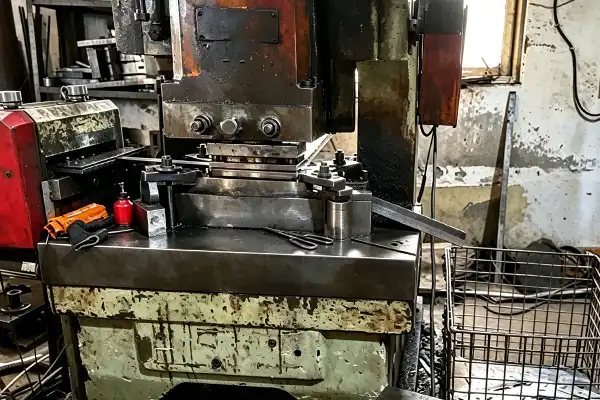
From small washers and brackets to large structural plates — our stamping and forming capabilities cover marine-grade material requirements.
| Press Capacity | 63 – 400 tons |
| Material Thickness | 0.5 – 12 mm |
| Supported Materials | 316L, 2205 Duplex, 304, Cu-Ni 90/10, Aluminum 5083/5086/5052 |
| Forming Capabilities | Stamping, Bending, Deep Draw, Roll Forming |
| Tolerance | ±0.05 mm standard, ±0.02 mm precision |
| Surface Condition | 2B mill finish, BA, or as-formed |
| Documentation | EN 10204 3.1 cert, PMI testing, traceability |
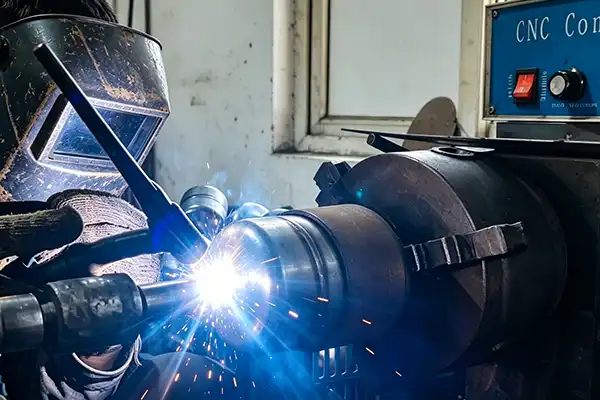
Welding & Assembly for Marine Yachts
Certified welding for hull structures, pressure vessels, deck assemblies, and yacht equipment — qualified to marine class society standards.
| Welding Processes | MIG/MAG, TIG, Plasma, SAW, Stud Welding |
| Welding Standards | AWS D1.6 (stainless), ISO 15614-1, EN 13480, ASME IX, ABS/DNV rules |
| Materials Welded | 316L, 2205 Duplex, 254 SMO, Cu-Ni alloys, Carbon Steel with marine coating |
| Max Component Size | 6,000 × 3,000 × 2,000 mm |
| Welding Positions | All positions (Flat, Horizontal, Vertical, Overhead) |
| Post-Weld Services | Pickling, Passivation, PMI Testing, Hydrostatic Test, Salt Spray Test |
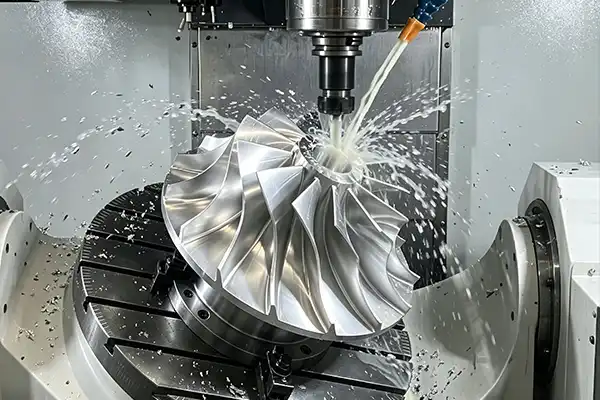
CNC Machining for Marine Yachts
Precision machining for hydraulic manifolds, valve bodies, pump housings, propeller shafts, and marine instrumentation.
| Machining Type | 3-Axis, 4-Axis & 5-Axis CNC Milling, CNC Turning, Boring |
| Max Workpiece Size | 1,500 × 1,000 × 600 mm (Milling), Ø400 × 1,500 mm (Turning) |
| Tolerance | ±0.02 mm standard, ±0.01 mm precision |
| Surface Finish | Ra 0.8 μm standard, Ra 0.4 μm achievable |
| Materials | 316L, 2205 Duplex, Cu-Ni, Bronze, Monel, Inconel, Aluminum Bronze |
| Volume | Prototype (1-50 pcs) to Series Production (1,000+ pcs) |
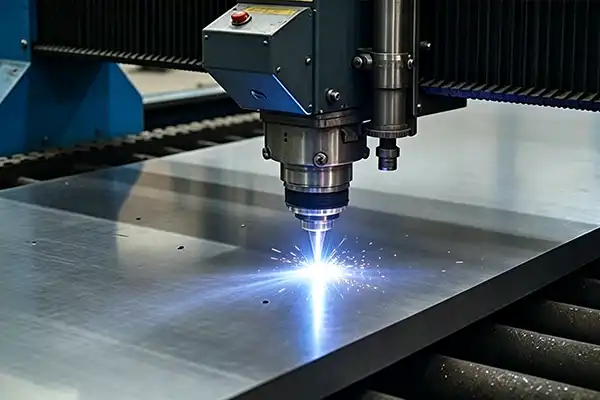
High-precision cutting for marine plate, structural profiles, and complex geometries — without heat-affected zones for critical applications.
| Cutting Methods | Fiber Laser (steel) |
| Sheet/Plate Max Size | 6,000 × 2,500 mm |
| Plate Thickness | 0.5 – 50 mm (laser) |
| Material Compatibility | Stainless steel, Duplex, Aluminum, Copper-Nickel, Titanium |
| Profile Max Length | 6,000 mm |
| Tolerance | ±0.1 mm laser |
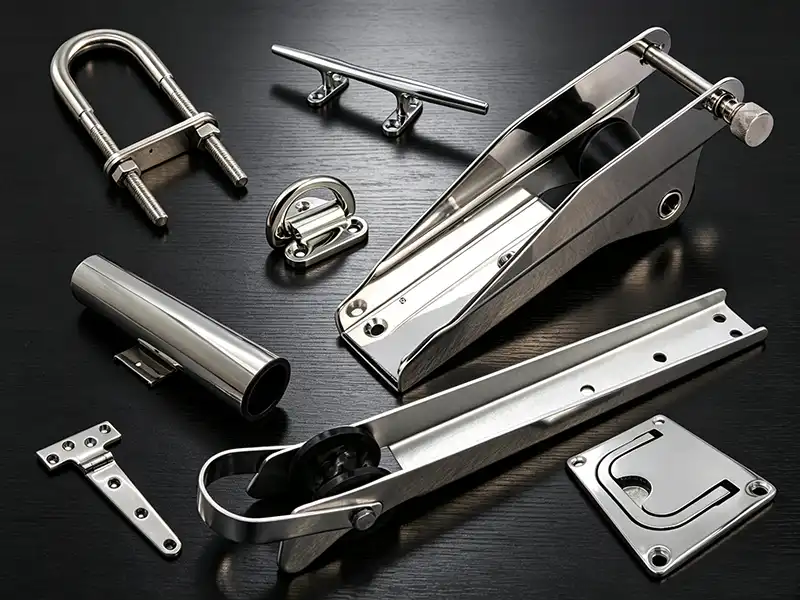
Typical Marine Parts We Manufacture
| Component Category | Examples | Key Processes |
|---|---|---|
| Deck Hardware | Cleats, bollards, chocks, fairleads, stanchions, rail bases | Casting + Machining, Welding, Polishing |
| Hull & Structural | Hull plates, frames, stiffeners, brackets, access covers, manhole covers | Laser/Plasma Cutting, Welding, Forming |
| Pipe & Fluid Systems | Pipe flanges, elbows, tees, reducers, valves, fittings, manifolds | CNC Machining, Welding, Pickling & Passivation |
| Propulsion & Shaft | Propeller shafts, coupling bolts, shaft brackets, stuffing boxes, bearings | CNC Turning, Forging, Precision Machining |
| Electrical & Control | Junction boxes, control panels, instrument housings, cable trays, switchgear | Sheet Metal Forming, Welding, Surface Treatment |
| Interior & Outfitting | Handrails, ladder rungs, hinges, latches, door hardware, cabinet fittings | Stamping, Welding, Polishing, PVD Coating |
Why Choose Conwhole for Marine Metal Parts?
⚓ Marine Material Expertise
316L, 2205 Duplex, Cu-Ni 90/10 & 70/30, Monel 400 — we know the right alloy for seawater, brackish water, and offshore splash zones. No more guessing, no premature failure.
📋 Class Society Documentation
Weld procedures, material certificates, NDT records, and dimensional reports formatted for DNV, Lloyd’s Register, Bureau Veritas, ABS, and CCS submissions. Your classification surveyor gets a complete audit-ready package.
🧂 Salt Spray Tested
Every marine-grade order can be salt spray tested per ASTM B117 up to 1,000 hours. We verify coating and material performance before delivery — you install with confidence, not hope.
✨ Pickling & Passivation Done Right
Post-weld pickling and passivation per ASTM A380 / ISO 15730 to restore the chromium oxide layer. We don’t skip this step — it’s the difference between 2-year and 20-year service life in saltwater.
Frequently Asked Questions — Marine Yacht Parts
Q1: What’s the difference between 316L and 2205 Duplex for yacht applications?
316L is the workhorse austenitic stainless steel for general marine use — good corrosion resistance, easy to weld and form. 2205 Duplex has roughly twice the yield strength of 316L and superior resistance to chloride pitting and stress corrosion cracking — preferred for critical yacht structures, propeller shafts, and high-pressure systems. We help you choose based on your specific service environment and mechanical requirements.
Q2: Can you provide documentation for yacht projects?
Yes. We support documentation packages for yacht builders and marine projects, including material certificates, weld procedure specifications, welder qualifications, NDT records, and dimensional reports. If your project needs class society support, we can coordinate the required documentation and inspection workflow.
Q3: What’s your typical lead time for yacht parts?
4–8 weeks depending on material availability (especially for 2205 Duplex and specialty marine materials) and documentation requirements. For standard 316L yacht parts, typical lead time is 3–5 weeks. Rush programs available with surcharge.
Q4: Do you do salt spray testing in-house or through partners?
Through our managed testing partner network, accredited per ISO/IEC 17025. Standard test duration: 96 hours, 240 hours, 480 hours, or 1,000 hours per ASTM B117. We provide test reports with photos at defined intervals. Optional: cyclic corrosion testing per ASTM G85 for harsher evaluation.
Q5: Can you handle large yacht hull plates and structural members?
Yes. Our fabrication facility handles marine plate up to 6,000 × 2,500 mm and structural members up to 12 meters long. For yacht delivery, we can pre-assemble sub-units with bolted connections for installation at the dock or in the yard.
Q6: What Cu-Ni alloys do you work with?
Cu-Ni 90/10 (C70600) and Cu-Ni 70/30 (C71500) — both standard marine alloys for seawater piping, heat exchangers, and hull fittings. We also work with Monel 400 (N04400) for hydrofluoric acid and high-temperature seawater service, and aluminum bronze for bearings and bushings.
Q7: Do you offer pickling and passivation services?
Yes — through our managed finishing partner network. Pickling removes heat tint and surface contamination; passivation restores the chromium oxide layer for maximum corrosion resistance. Both processes are performed per ASTM A380 / ISO 15730 standards. We provide post-treatment certificates.
Q8: What’s the minimum order quantity for yacht parts?
No strict MOQ. We handle from single prototype parts to ongoing production runs. Yacht projects start at 1 piece, and we support prototyping for new designs as well as recurring supply for maintenance and upgrades.