
8 MIN READ
Selecting the Right Metal Surface Finish: Powder Coating vs. Anodizing vs. Zinc Plating vs. Passivation
An engineering guide for procurement managers and mechanical engineers evaluating corrosion resistance, cost, appearance, and DFM tradeoffs for custom hardware surface finishing.
Key Takeaways for Procurement & Engineering Teams
- Finish is the primary corrosion-defense layer, not cosmetics: Powder coating delivers the thickest organic film (60–120 μm) with the widest color range, while zinc plating provides sacrificial cathodic protection at the lowest cost for steel.
- Base material dictates the finish family: Anodizing works only on aluminum, and passivation is stainless-steel-specific. Specifying the wrong finish for the base metal causes premature failure.
- Match corrosion rating to the environment: Marine/salt-spray exposure needs 500–1,000+ hour powder coating, sacrificial zinc/galvanizing, or 316 stainless + passivation.
- Cost rule of thumb: Zinc plating is the cheapest steel protection; powder coating adds color + durability at a moderate premium; anodizing and passivation are precision batch treatments.
The Surface Finish Dilemma in Custom Hardware Sourcing
Surface finishing is the final — and often most consequential — engineering decision on a custom metal part. It determines corrosion life, cosmetic appearance, dimensional tolerance, and per-unit cost. Choosing the wrong finish (or applying a finish to the wrong base material) is one of the most common causes of field failures and rejected batches in OEM hardware sourcing.
The key distinction is that a finish is not cosmetic — it is the primary corrosion-defense layer. Understanding which finish family applies to your base material, and which environment it must survive, is the difference between a part that lasts a decade and one that fails in the first season.
Conwhole manages the full finishing spectrum through a vetted partner network, so a single drawing can be quoted across powder coating, anodizing, plating, and passivation — with material compatibility and tolerance impact validated before any part enters production.
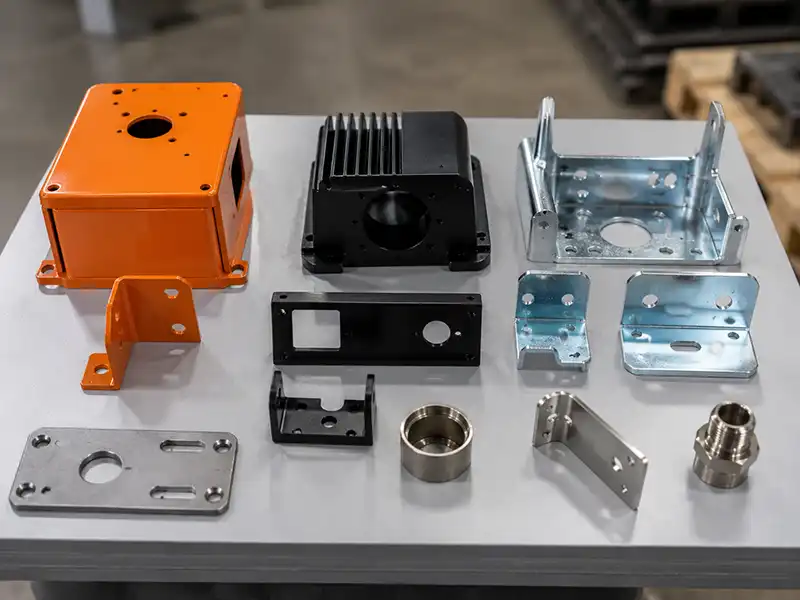
Powder Coating vs. Anodizing: Organic Film vs. Electrochemical Oxide
Powder Coating — Thick, Colorful, Protective
Powder coating applies a dry thermoset polymer (polyester, epoxy, or polyurethane) electrostatically, then cures it in an oven to form a continuous 60–120 μm film. It is the most versatile finish for steel, aluminum, and stainless enclosures, frames, and outdoor equipment, offering any RAL color, matte-to-gloss textures, and 500–1,000+ hours of neutral salt-spray resistance. Its thicker film also hides minor surface imperfections and adds impact/abrasion resistance.
Anodizing — Aluminum-Only Oxide Growth
Anodizing is an electrochemical process that converts the aluminum surface into a hard, porous aluminum-oxide layer (5–25 μm standard; 25–100 μm for hardcoat). Because the oxide grows from the base metal rather than being deposited on top, it bonds perfectly and cannot peel. It is ideal for aluminum housings, heat sinks, cosmetic parts, and marine aluminum, with dyeing options (clear, black, color) and hardcoat hardness up to HV 350–500.
| Property | Powder Coating | Anodizing |
|---|---|---|
| Base Material | Steel, Aluminum, SS | Aluminum Only |
| Layer Type | Deposited polymer film | Grown oxide layer |
| Thickness | 60–120 μm | 5–25 μm (hardcoat 25–100) |
| Color Range | Any RAL, matte/gloss/texture | Clear, black, dyed colors |
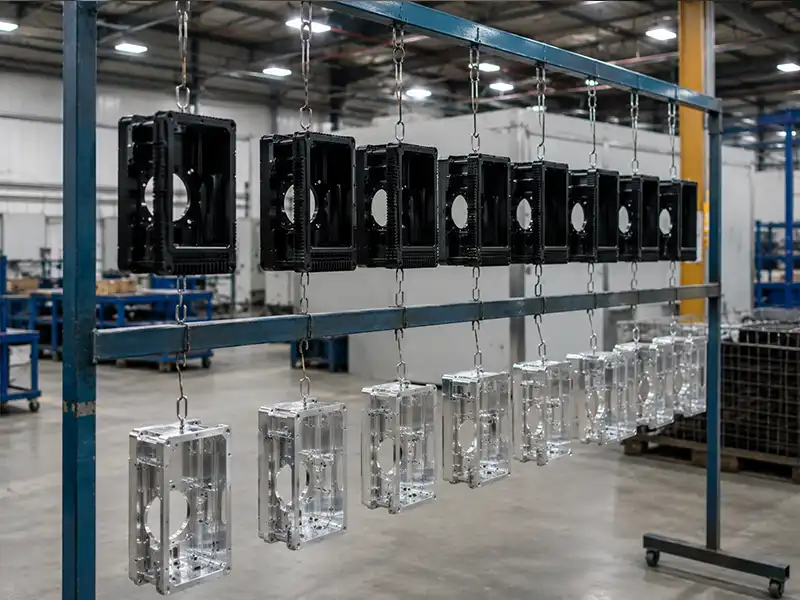
Zinc Plating vs. Passivation: Sacrificial Protection vs. Oxide Restoration
Zinc Plating — Low-Cost Sacrificial Protection for Steel
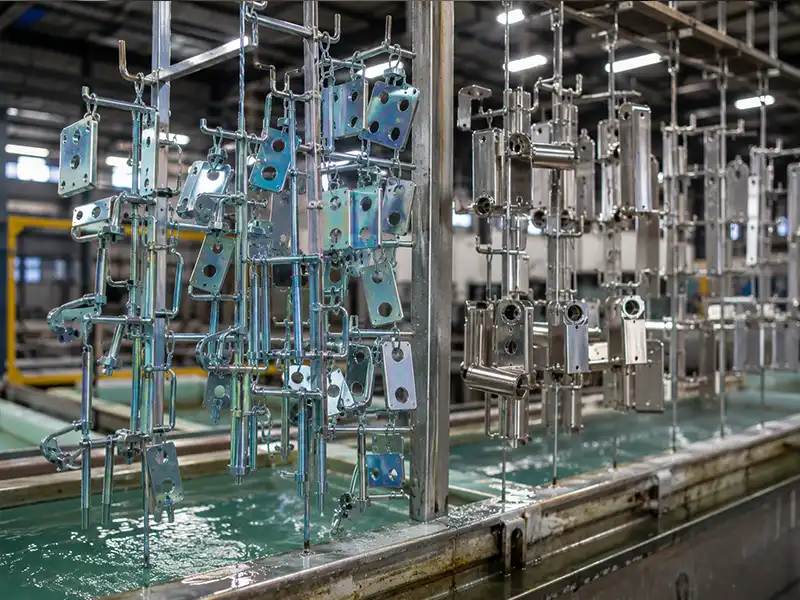
Zinc plating electrodeposits a 5–25 μm zinc layer onto steel fasteners, brackets, and stampings. Zinc is more electrochemically active (anodic) than steel, so it corrodes first and sacrificially protects the base metal even where the coating is scratched. It is the lowest-cost steel corrosion treatment, often topped with a clear or yellow chromate conversion layer for extra passivation and a recognizable silver-blue or iridescent finish.
Passivation — Restoring Stainless Steel’s Native Oxide
Passivation is a chemical treatment (nitric or citric acid) for stainless steel that removes surface free iron and machining contaminants, then promotes the reformation of a uniform chromium-oxide layer. It adds no measurable thickness (~2–5 nm) and no color change, but it restores the alloy’s natural corrosion resistance — essential for 304/316 hardware used in food, pharmaceutical, and marine applications.
| Property | Zinc Plating | Passivation |
|---|---|---|
| Base Material | Steel Only | Stainless Steel Only |
| Mechanism | Sacrificial anodic layer | Chromium-oxide restoration |
| Thickness | 5–25 μm | ~2–5 nm (no build-up) |
| Appearance | Silver-blue / iridescent chromate | Clear (no color change) |
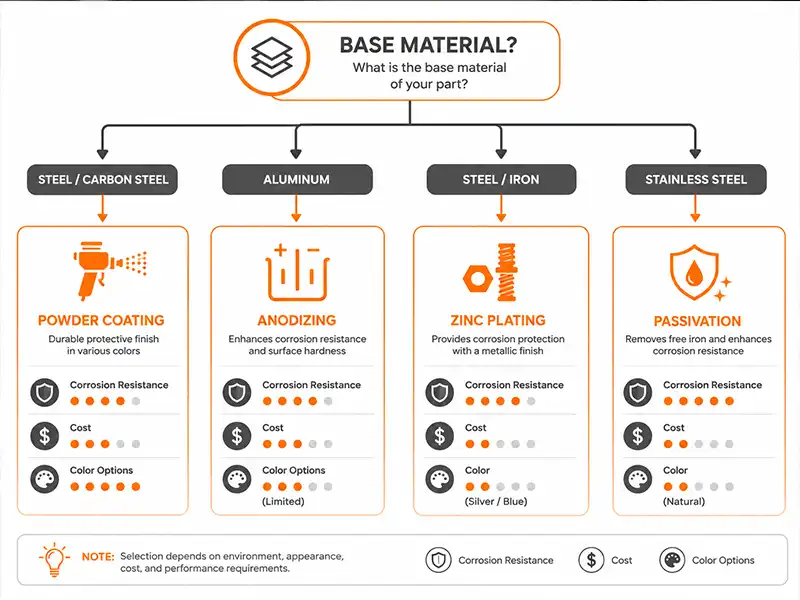
Finish Selection & Application Decision Matrix
Selecting the optimal surface finish balances base material, environmental exposure, cosmetic requirements, and raw material budget. Use the decision matrix below to shortlist the right finish for your application.
| Industry Application | Recommended Finish | Key Decision Rationale |
|---|---|---|
| Marine & Outdoor Equipment | Powder Coat / Hardcoat Anodize / 316+Passivate | 500–1,000h salt-spray resistance or chloride-pitting immunity required. |
| Food & Pharma Contact | Passivation / Electropolish (SS) | Cleanable, non-reactive, corrosion-resistant surface for contact parts. |
| Automotive & Machinery | Zinc Plating / Powder Coat | Low-cost sacrificial protection for fasteners; durable cosmetic coat for housings. |
| Indoor & Cost-Sensitive | Zinc Plating / 430 Stainless | Cheapest protection for dry indoor parts with minimal cosmetic demand. |
Managed Finishing Partner Network
Access a vetted partner network of powder coating, anodizing, plating, and passivation lines — matched to your material, volume, and environment requirements.
Material-Finish Matching Review
Our engineers validate base material, operating environment, and tolerance impact before specifying a finish — preventing wrong-finish field failures.
Salt Spray & Thickness Verification
Corrosion resistance confirmed with neutral salt-spray testing, coating thickness measurement, and adhesion checks before every shipment.
Global Delivery Support
Finished parts shipped worldwide with full traceability, inspection reports, and export documentation for OEM programs.
Q1: What is the cheapest corrosion-resistant finish for steel parts?
Zinc plating is the lowest-cost steel corrosion treatment. It applies a thin sacrificial zinc layer that protects the base metal even when scratched, making it ideal for fasteners and indoor/outdoor brackets.
Q2: Can I anodize stainless steel or carbon steel?
No. Anodizing works only on aluminum because it grows an oxide layer from the base metal itself. Steel and stainless steel use different treatments such as zinc plating, powder coating, or passivation.
Q3: What is the difference between anodizing and powder coating?
Anodizing converts aluminum into a hard, integral oxide layer (no peeling, excellent wear), while powder coating deposits a thick organic polymer film with a wider color range and a thicker corrosion barrier.
Q4: Does passivation add thickness or change the color of stainless steel?
No. Passivation adds only a few nanometers of oxide and causes no color change. It removes surface free iron and restores the chromium-oxide layer, maximizing the alloy’s natural corrosion resistance.
Q5: Which finish is best for marine or salt-spray environments?
For steel use powder coating or hot-dip galvanizing; for aluminum use hardcoat anodizing; for stainless specify 316 grade with passivation to resist chloride-induced pitting.
Q6: How thick is a powder coat and how does it affect tolerance?
Powder coat is typically 60–120 μm. It can affect close-tolerance fits and threaded holes, so masking or post-coat rework should be specified during the DFM stage for precision parts.
Q7: What finish should I choose for stainless steel in food processing?
304 or 316 stainless with passivation (or electropolishing) is standard for food and pharmaceutical contact surfaces, providing cleanability, corrosion resistance, and regulatory compliance.
Q8: Can Conwhole help me select the right surface finish?
Yes. Send your drawing and material/environment requirements, and our engineers will recommend the optimal finish, validate tolerance impact, and provide a DFM and cost analysis within 24 hours.
Need Technical Guidance on Metal Surface Finishing?
Send your custom hardware STEP files, 2D drawings, or operating environment requirements. Conwhole’s engineering team will recommend the optimal finish, validate tolerance impact, and provide a DFM and cost analysis within 24 hours.