
Laser Cutting vs Waterjet vs Plasma Cutting
Accuracy, material range, maximum thickness, heat-affected zone, kerf quality and cost — the engineering comparison that tells you which cutting process fits your parts.
Key Takeaways for Procurement & Engineering Teams
1. Accuracy: Laser cutting is the most precise (±0.1 mm), followed by waterjet (±0.2 mm), then plasma (±0.5 mm). Tight-tolerance sheet metal parts almost always favor laser.
2. Material Range: Waterjet cuts virtually any material; laser and plasma are metal-only — and laser struggles with highly reflective alloys like copper and mirror-finish aluminum.
3. Heat-Affected Zone (HAZ): Waterjet is a cold process with zero HAZ; laser produces a small HAZ; plasma produces the largest HAZ, which can warp thin or heat-sensitive parts.
4. Cost & Speed: Plasma is cheapest and fastest for thick plate; laser is fastest for thin sheet; waterjet is slowest and most expensive to run — reserve it for thick or heat-sensitive work.
Three Cutting Methods, Three Different Trade-Offs
Laser, waterjet, and plasma all separate metal — but they do it through completely different physics, which means different accuracy, different heat input, and different cost curves. Choosing wrong either overpays for capability you don’t need, or produces parts that won’t hold tolerance.
This guide breaks down each process across the five factors that matter to sourcing: dimensional accuracy, material compatibility, maximum thickness, heat-affected zone, and running cost — then gives you a selection matrix to match the process to your part. Conwhole’s in-house capability is fiber laser cutting (sheet and tube). For thick plate, heat-sensitive materials, and non-metals where laser is a poor fit, we deliver waterjet and plasma through an audited partner network — so you get an honest process recommendation rather than one process forced onto every job.
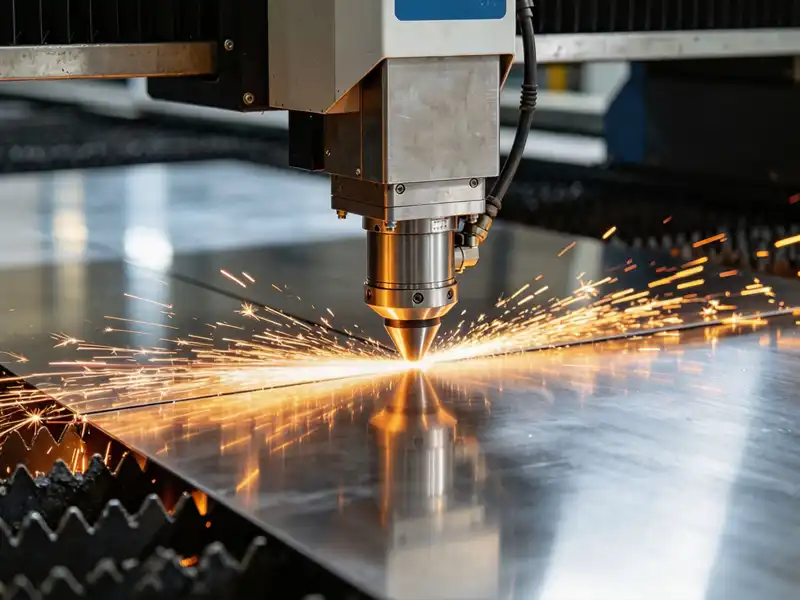
Laser Cutting: The Precision Workhorse
| Parameter | Fiber Laser (CO2 / Fiber) |
|---|---|
| Dimensional accuracy | ±0.1 mm (best in class) |
| Material range | Steel, stainless, aluminum (reflective alloys harder) |
| Max thickness (steel) | Up to ~25 mm (fiber) |
| Kerf width | 0.1–0.3 mm (narrow, clean edge) |
| Heat-affected zone | Small — minimal distortion on thin sheet |
| Best for | Thin-to-medium sheet, complex geometry, tight tolerance |
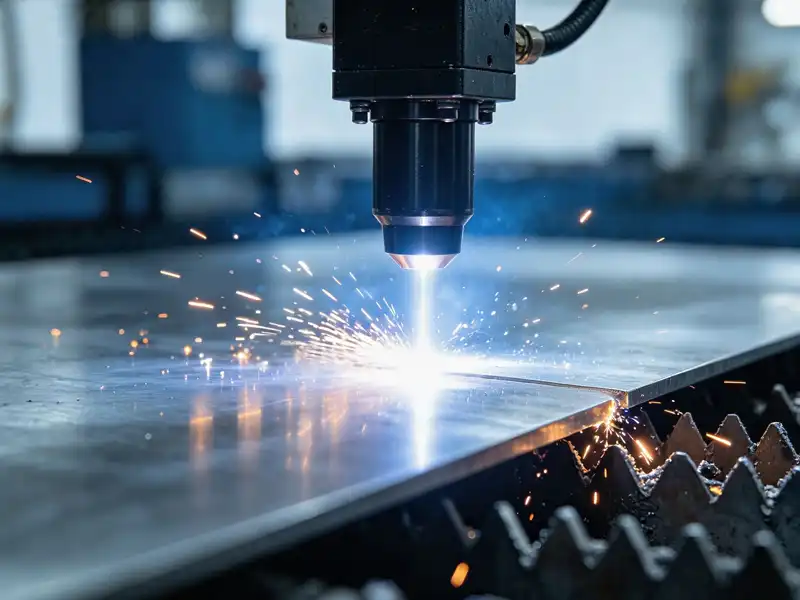
Waterjet vs Plasma: Thick, Cold, or Cheap
| Parameter | Waterjet | Plasma |
|---|---|---|
| Accuracy | ±0.2 mm | ±0.5 mm |
| Material range | Virtually any (metal, composite, stone, glass) | Conductive metals only |
| Max thickness (steel) | 200 mm+ | ~50 mm |
| Heat-affected zone | None (cold cut) | Large — can warp thin parts |
| Kerf / edge quality | 0.5–1.5 mm, smooth, no slag | 1–5 mm, rougher, may need cleanup |
| Running cost | High (slow, abrasive consumables) | Low (fast, cheap consumables) |
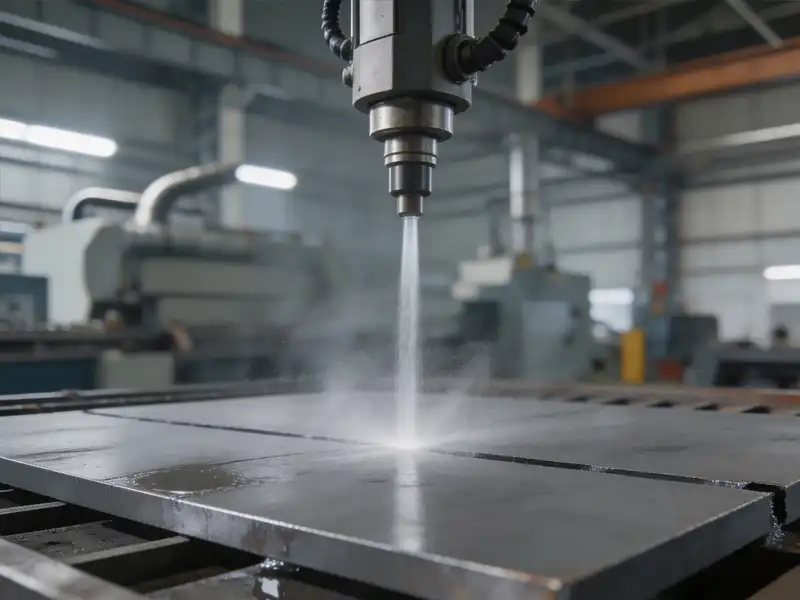
Cutting Process Selection Matrix
Match the process to your part. Laser wins on precision and thin sheet; waterjet wins on thickness and zero heat input; plasma wins on thick-plate speed and lowest cost. Use this matrix to shortlist before you request a quote.
| Selection Factor | Laser Cutting | Waterjet | Plasma |
|---|---|---|---|
| Tight tolerance (±0.1 mm) | Best choice | Acceptable | Not suitable |
| Thin sheet (<6 mm), high volume | Best choice | Slow, costly | Too much HAZ |
| Thick plate (>25 mm) | Limited | Best choice | Good (up to 50 mm) |
| Heat-sensitive / non-metal material | No | Best choice | No |
| Lowest cost, fast turnaround | Good on sheet | Expensive | Best choice (thick plate) |
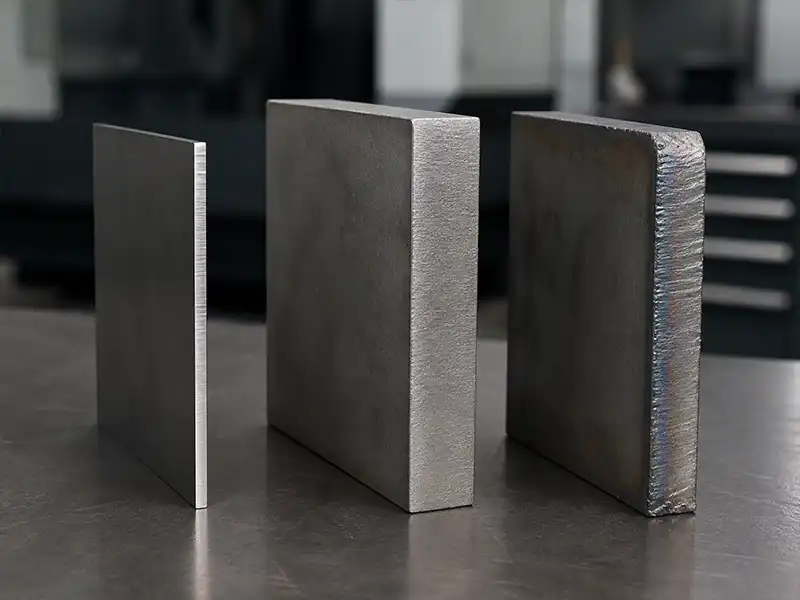
Why Choose Conwhole for Precision Cutting
In-House Fiber Laser Fleet
High-power fiber laser cutting for sheet metal with ±0.1 mm accuracy and clean, ready-to-weld edges.
Honest Process Recommendation
In-house fiber laser, plus waterjet and plasma through an audited partner network — we recommend the best-fit process for your part.
Material-Tolerant Capability
Steel, stainless, aluminum and more — cut and fabricated to spec with documented dimensional inspection.
Cut-to-Quote in 24 Hours
Send your drawing and we’ll recommend the best-fit cutting process and deliver a unit price quote within 24 hours.
Q1: Which cutting process is most accurate?
Laser cutting, at ±0.1 mm. Waterjet follows at ±0.2 mm, and plasma is the least accurate at ±0.5 mm — suitable for structural work, not precision parts.
Q2: What is the maximum thickness each process can cut?
Waterjet handles steel beyond 200 mm; plasma reaches about 50 mm; fiber laser typically tops out around 25 mm on steel.
Q3: Does laser cutting work on copper and reflective aluminum?
It can, but reflective alloys are harder for laser and often better suited to waterjet. Share your material grade and we’ll recommend the right process.
Q4: Which process has no heat-affected zone?
Waterjet is a cold process with zero HAZ, making it ideal for heat-sensitive alloys and materials that cannot tolerate thermal stress.
Q5: What is the cheapest cutting method?
Plasma is cheapest for thick plate; laser is most cost-effective for thin sheet. The right choice depends on your material thickness and tolerance.
Q6: Can Conwhole handle the cutting and the downstream fabrication?
Yes. Fiber laser cutting, bending, welding, machining and finishing are handled in-house, so you get a complete part from one supplier with a single point of accountability.
Q7: Do you run waterjet and plasma cutting in-house?
Fiber laser cutting is in-house. Waterjet and plasma are delivered through an audited partner network for thick plate, heat-sensitive materials, and non-metals — Conwhole manages quality and accountability as a single point of contact.
Ready to Cut Your Parts the Right Way?
Send your STEP files, 2D drawings, or material and thickness specs. Conwhole’s engineering team will recommend the best-fit cutting process — in-house fiber laser or managed waterjet/plasma — and deliver a unit price quote within 24 hours.