
8 MIN READ
Selecting the Right Stainless Steel Grade: 304 vs. 316 vs. 430
An engineering guide for procurement managers and mechanical engineers evaluating corrosion resistance, PREN index, mechanical strength, cost, and DFM tradeoffs for custom hardware.
Key Takeaways for Procurement & Engineering Teams
- Core Metallurgy & Pitting Resistance: 304 SS (18/8) is the baseline versatile austenitic grade for general indoor/outdoor hardware. 316 SS adds 2-3% Molybdenum, increasing its PREN index from ~19 to ~23–25 to prevent chloride pitting in marine environments.
- Ferritic Cost Efficiency: 430 SS is a nickel-free ferritic grade offering ~20–30% lower material cost than 304, magnetic response, and high resistance to stress corrosion cracking for indoor enclosures.
- Formability & Machinability: 304 and 316 offer superior deep drawing ductility but work-harden faster. 430 has a lower work-hardening rate, allowing tight press brake bending without extreme machine tonnage.
- Cost vs. Performance Rule: Specify 430 for dry indoor/cost-sensitive parts, 304 for standard industrial hardware, and 316 strictly for marine exposure, saline mist, or harsh chemical immersion.
The Metallurgical Dilemma in Custom Hardware Sourcing
When designing or sourcing custom sheet metal enclosures, CNC machined fittings, or stamped brackets, selecting the wrong stainless steel grade is one of the most common causes of unexpected field failures or budget overruns. Over-specifying 316 stainless steel for benign indoor environments inflates material costs by 30%+, while under-specifying 304 or 430 in coastal marine settings leads to catastrophic pit corrosion within months.
This engineering guide compares 304, 316, and 430 stainless steel grades across chemical composition, PREN corrosion indices, mechanical strength, cost structures, and DFM manufacturing trade-offs.
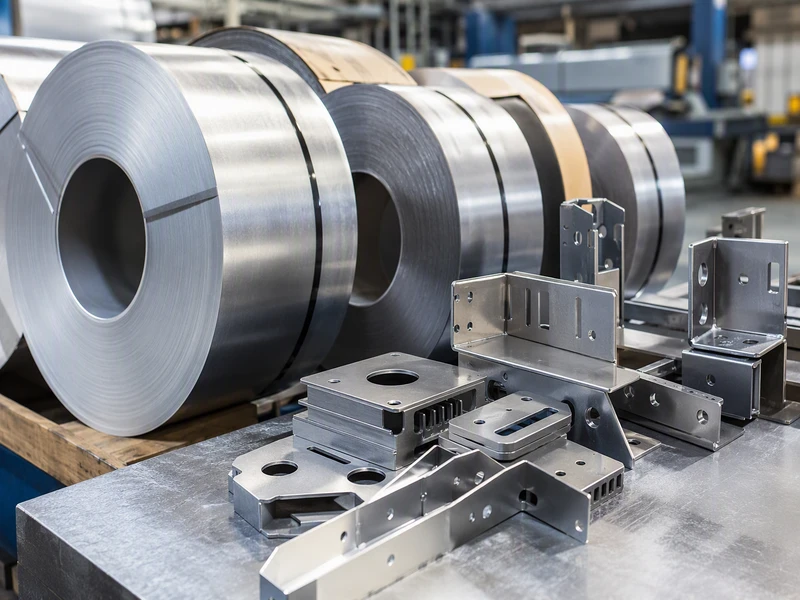
Austenitic Comparison: 304 vs. 316 Stainless Steel
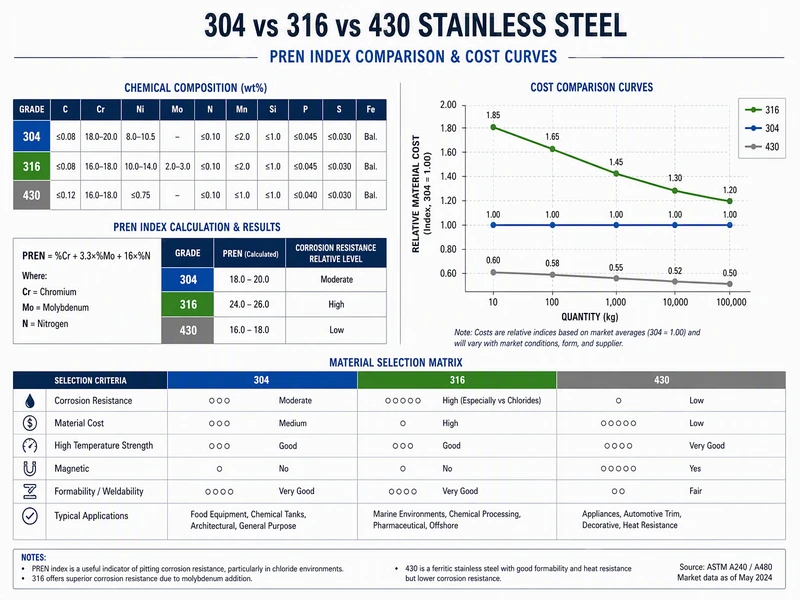
Both 304 and 316 belong to the 300-series austenitic stainless steel family, featuring a face-centered cubic (FCC) crystal structure that remains non-magnetic in annealed states. However, the addition of Molybdenum (2.0% – 3.0%) in 316 radically alters its electrochemical corrosion resistance.
Pitting Resistance Equivalent Number (PREN) Formula
PREN = %Cr + 3.3(%Mo) + 16(%N)
• 304 Stainless Steel: 18.0 + 3.3(0) + 16(0.05) = ~18.8 PREN
• 316 Stainless Steel: 16.5 + 3.3(2.1) + 16(0.05) = ~24.2 PREN
Higher PREN values indicate exponentially greater resistance to localized pitting and crevice corrosion caused by sodium chloride (NaCl) and industrial acids.
| Chemical Component | Grade 304 (18/8) | Grade 316 (Marine) |
|---|---|---|
| Chromium (Cr) | 17.5% – 19.5% | 16.0% – 18.0% |
| Nickel (Ni) | 8.0% – 10.5% | 10.0% – 14.0% |
| Molybdenum (Mo) | 0% (None) | 2.0% – 3.0% |
| Salt Spray Fog Life | 240 – 500 Hours | 1,000+ Hours |
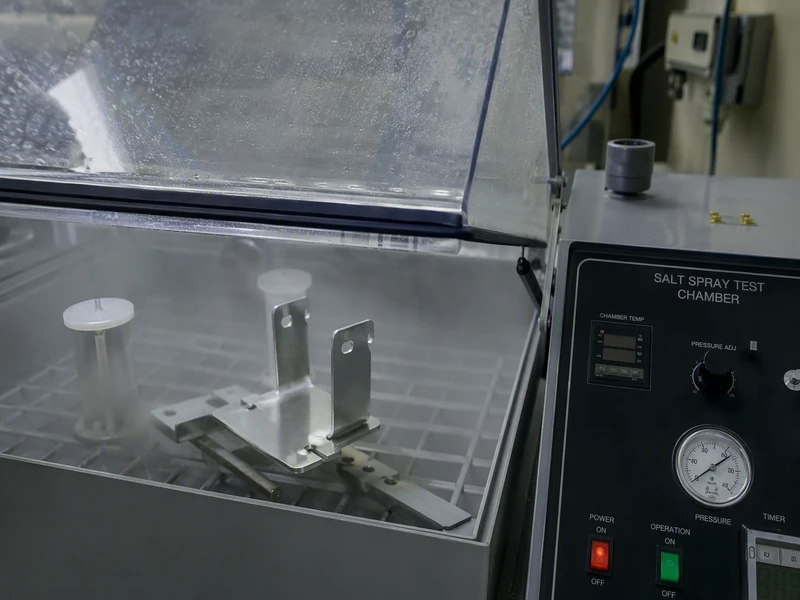
Ferritic Alternative: Grade 430 Stainless Steel
Grade 430 belongs to the ferritic stainless steel family (body-centered cubic crystal structure). Containing 16-18% Chromium but 0% Nickel, 430 stainless steel eliminates exposure to volatile global nickel market surcharges, providing exceptional cost stability for high-volume custom stamping and sheet metal manufacturing.
Key Engineering Characteristics of Grade 430:
- Strong Magnetic Response: Unlike 300-series grades, 430 is ferromagnetic in all thermal conditions, making it suitable for magnetic sensor mounts, solenoids, and appliance latches.
- Resistance to Stress Corrosion Cracking (SCC): Because ferritic structures lack nickel, 430 is virtually immune to chloride-induced stress corrosion cracking that can affect 304 under high tensile thermal stress.
- Lower Work-Hardening Rate: Press brake bending and shallow stamping require less machine tonnage. However, ductility is lower than 304, requiring larger minimum bend radii (≥ 1.0t) to avoid outer radius cracking.
- Welding Limitations: Grain growth in the Heat-Affected Zone (HAZ) reduces impact toughness post-welding. TIG/MIG welding 430 requires pre-heating and post-weld annealing.
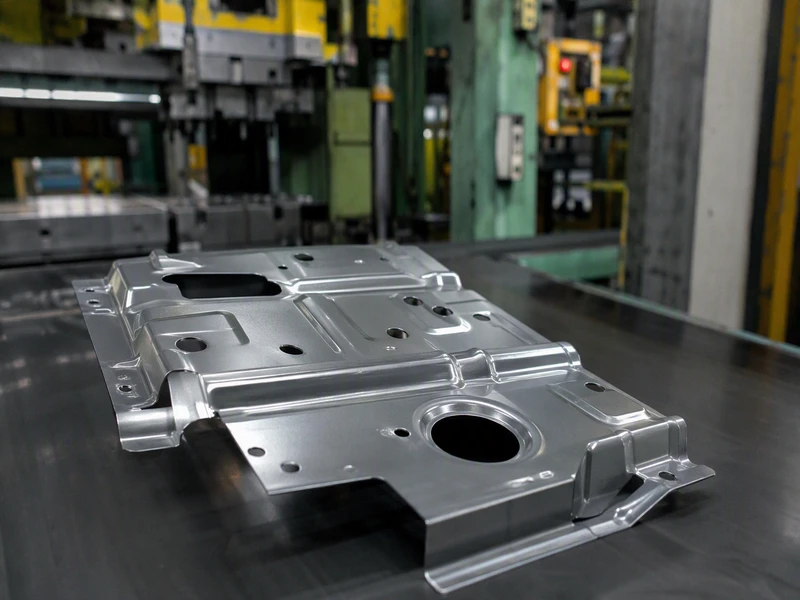
Engineering Selection & Application Decision Matrix
Selecting the optimal stainless steel alloy balances environmental exposure, mechanical fatigue, raw material budget, and post-fabrication surface finishing.
| Industry Application | Recommended Alloy | Key Decision Rationale |
|---|---|---|
| Marine & Offshore Hardware | Grade 316 / 316L | Molybdenum prevents pitting from salt spray mist and seawater immersion. |
| Industrial Electronics Enclosures | Grade 304 / 304L | Optimal balance of deep draw formability, TIG weldability, and atmospheric resistance. |
| Commercial Appliance & Trims | Grade 430 | High aesthetic mirror polish, magnetic latching compatibility, and 25% cost reduction. |
| Chemical Processing Fittings | Grade 316L | Low-carbon 316L prevents intergranular carbide precipitation during heavy TIG welding. |
XRF Spectrometry Alloy Verification
Every incoming coil and sheet lot undergoes positive material identification (PMI) using handheld XRF analyzers to guarantee exact Nickel, Molybdenum, and Chromium levels before cutting.
DFM Optimization & Cost Engineering
Our engineering team analyzes your CAD drawings to evaluate whether a lower-cost grade like 430 or 304 can meet performance specs through electropolishing or passivating without overspending on 316.
Precision Passivation & Surface Treatment
Citric and nitric acid passivation per ASTM A967 is managed through our audited finishing partner network to strip free iron from machined surfaces, maximizing the passive chromium oxide protection layer.
Full Chemical & Mechanical Certification
All custom hardware shipments include EN 10204 3.1 Material Test Reports (MTR) detailing chemical analysis, tensile yield strength, elongation, and salt spray test results.
Q1: What is the main chemical difference between 304 and 316 stainless steel?
The primary difference is the addition of 2.0% to 3.0% Molybdenum in 316 stainless steel. While 304 contains 18% Chromium and 8% Nickel, the Molybdenum in 316 provides superior resistance to chloride pitting, salt spray, and industrial acids.
Q2: Is 430 stainless steel magnetic, and will it rust easily?
Yes, 430 stainless steel is strongly magnetic due to its ferritic crystal structure. It possesses good corrosion resistance in dry indoor environments and mild atmospheric exposure, but it will rust faster than 304 if exposed to salt water or standing outdoor moisture.
Q3: How much more expensive is 316 stainless steel compared to 304?
Raw material market prices for 316 stainless steel are typically 25% to 35% higher than 304, driven by the higher Nickel content and Molybdenum additions. For non-saline applications, specifying 304 provides substantial cost savings.
Q4: Why should I choose 430 stainless steel over 304 for stamped parts?
430 stainless steel contains zero Nickel, eliminating raw material market price surcharges and offering a 20% to 30% cost reduction compared to 304. It also has a lower work-hardening rate, extending stamping die tool life during high-volume production.
Q5: What is PREN, and why is it important for marine hardware?
PREN stands for Pitting Resistance Equivalent Number. It calculates an alloy’s resistance to localized pitting corrosion based on Chromium, Molybdenum, and Nitrogen percentages. Grade 316 has a PREN of ~23-25 compared to 304’s ~19, making 316 essential for marine hardware.
Q6: Can 430 stainless steel be welded easily during custom sheet metal fabrication?
430 can be TIG or resistance welded, but it is more challenging than 304. Welding ferritic 430 causes grain growth in the Heat-Affected Zone (HAZ), reducing ductility. Post-weld annealing or specifying 304/316 is recommended for heavily welded structural hardware.
Q7: Does passivation improve the corrosion resistance of 304 and 316 parts?
Yes. Passivation (citric or nitric acid treatment) dissolves free iron particles embedded during machining, laser cutting, or bending. This enriches the surface Chromium layer, forming a uniform Chromium Oxide passive film that prevents surface rusting.
Q8: How does Conwhole ensure material grade compliance for custom metal parts?
Conwhole verifies every batch of raw sheet metal and bar stock using handheld XRF spectrometry analyzers (PMI testing) and provides EN 10204 3.1 Material Test Reports (MTR) with every custom hardware shipment.
Need Technical Guidance on Stainless Steel Material Selection?
Send your custom hardware STEP files, 2D drawings, or operating environment requirements. Conwhole’s engineering team will perform DFM analysis and provide material cost-optimization recommendations within 24 hours.